



Quick Summary
Breathable natural fibers such as cotton, linen, alpaca and silk are common choices for eczema-prone skin because they tend to feel softer and less irritating than many synthetics. Each has trade-offs, so no single fabric suits everyone, and testing one change at a time helps.
- Cotton is soft and natural but holds sweat, so it suits everyday layers better than active wear.
- Linen is breathable but often feels rougher until it has been washed several times.
- Check fiber content, since blends like the Soft Touch socks contain acrylic and nylon, not pure alpaca.
- Wash new clothes first with a fragrance-free detergent and rinse thoroughly.
- Patch test new fabric on a small area before wearing it all day.
Table of Contents
- Why Fiber Choice Matters During an Eczema Flare-Up
- 1. Cotton: The Common Starting Point
- 2. Linen: Cool and Breathable, but Often Rougher
- 3. Alpaca Fiber: Warmth Without the Usual Itch
- 4. Silk and Bamboo: Smooth Options With Trade-Offs
- Fabrics to Avoid With Eczema-Prone Skin
- How to Wash Clothes for Eczema-Prone Skin
- Building Your Flare-Up Wardrobe Starting With One Pair of Socks
- Frequently Asked Questions
Why Fiber Choice Matters During an Eczema Flare-Up
Clothing that touches inflamed skin can make a flare feel worse. For people with atopic dermatitis, fabric texture and fit can affect how clothing feels against the skin. A 2020 review published on PubMed review of fabric selection in atopic dermatitis looked at cotton, wool, lyocell, silk and anionic fabrics in people with this condition. It is a useful starting point, though no single fabric works for everyone.
This guide walks through fabric choices and the trade-offs each one brings.
Fiber choice is only part of the picture. The same sock or shirt can feel different in different seasons.
1. Cotton: The Common Starting Point
Cotton is one fabric option for everyday layers. The comparison covers how its durability stacks up against alpaca.
The trade-off shows up during activity. The National Eczema Association guidance on dressing for winter activity notes that cotton is often recommended for its natural, soft, nonirritating fibers, but it is not a great choice for active wear. Cotton holds sweat, and damp fabric can feel clammy against irritated skin.
Each fabric in this guide brings different trade-offs, and the table below summarises the main ones.
| Fabric | Best for | Key difference |
|---|---|---|
| Cotton | Everyday layers | Soft and natural, but holds sweat |
| Linen | Cool, breathable wear | Breathable, often rougher at first |
| Alpaca blend | Warm daily socks | Warm without the usual itch |
| Silk | Light layers and sleep wear | Smooth and low friction, but expensive |
| Bamboo | Soft, moisture-handling wear | Soft, but often heavily processed |
2. Linen: Cool and Breathable, but Often Rougher
Linen is another fabric option to consider.
Look for washed or enzyme-softened linen, which feels smoother after a few cycles. Test a new piece on a small patch of skin before wearing it all day.
3. Alpaca Fiber: Warmth Without the Usual Itch
Purely Alpaca's Soft Touch Therapeutic Alpaca Slouchy Socks | purelyalpaca.com are described as soft, warm, and comfortable, with a light and gentle fit for daily wear.

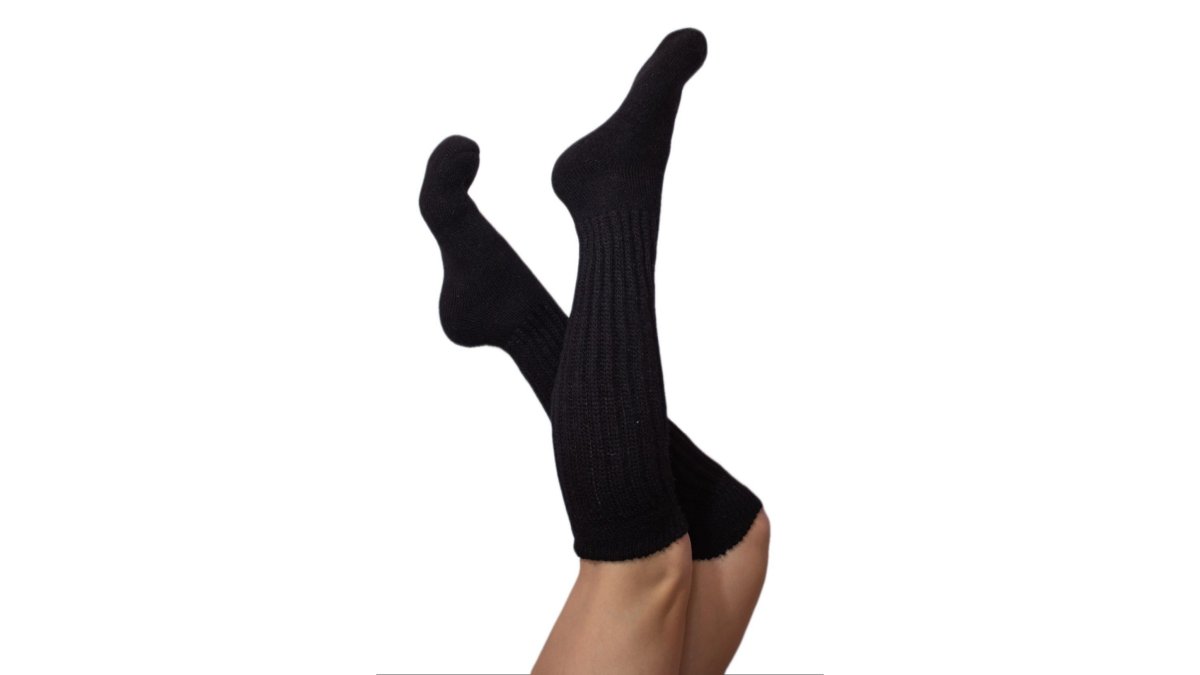
Blends matter. The Soft Touch socks list 48% alpaca, 40% acrylic, 8% nylon and 4% spandex, so they are not pure alpaca. Check the fiber content on any product before you buy, and read the care label, since hot water and aggressive drying can change how a sock feels.

Alpaca Socks for Sleep and Daily Wear
Purely Alpaca lists several styles, including the Knee-Hi Alpaca Socks | purelyalpaca.com at $36.95 and the Alpaca Golf/Sport Socks | purelyalpaca.com at $17.95. The Knee-Hi listing describes a loose weave and a non-binding fit.

4. Silk and Bamboo: Smooth Options With Trade-Offs
Silk has a smooth surface that reduces friction, and many people find it gentle on sensitive skin. It is also expensive and needs careful washing. Bamboo fabrics feel soft and handle moisture well, but they are often processed heavily. Ask how the fiber was made before you buy.
Soft Touch Therapeutic Alpaca Slouchy Socks →
Both fibers suit light layers and sleep wear better than heavy outerwear.
Fabrics to Avoid With Eczema-Prone Skin
Most guidance on fabrics to avoid stops at "wool and synthetics." That is a useful starting point, but it hides the reasons fabrics irritate skin, and the reasons some "natural" fabrics can still cause problems.
Why Wool Itches (and Why Some Wool Is Different)
Conventional sheep's wool has scaly fiber edges that catch on skin and create micro-friction, especially in coarse grades. That mechanical irritation, combined with wool's warmth, is why many people with atopic dermatitis react to it. Finer grades, merino and especially ultrafine merino, have smoother, thinner fibers and are less prickly, but they are not risk-free. Some people react to lanolin or to the dyes and finishes used on wool. If you want to test wool, start with a small area and a short wear time.
Why Synthetics Trap Heat and Sweat
Polyester, nylon and acrylic are generally less breathable than natural fibers and can hold heat and moisture against the skin. Damp, warm skin is a common trigger for itching. That does not mean all synthetics are off-limits, moisture-wicking athletic fabrics are designed to move sweat away from skin, but everyday synthetic layers worn against inflamed skin are a common source of discomfort.
The 'Natural' Trap: Processed Fibers and Finishes
A "natural" or "bamboo" label does not guarantee a minimally processed or hypoallergenic fabric. Bamboo rayon, for example, is a manufactured fiber made from a plant source. Dyes, softeners, wrinkle-resistant finishes and flame retardants can all leave residues that irritate skin, regardless of the underlying fiber. New garments with a strong chemical smell are a warning sign.
Other Common Irritants
- Rough seams and tags. Physical friction from seams, labels and tight elastic can leave marks and trigger scratching.
- Tight fit. Garments that bind reduce airflow and increase friction.
- Heavy finishes. Stiff, coated or heavily treated fabrics feel rougher and trap heat.
Test One Change at a Time
Eczema triggers vary from person to person, and no single fabric list fits everyone. A cautious approach is to change one variable at a time, one new fiber, one new detergent, one new fit, and note how your skin responds over several days. Patch testing a small piece of fabric against intact skin before a full day of wear is a reasonable first step, though it is not a guarantee. If a fabric causes burning, spreading rash or worsening symptoms, stop wearing it and talk to your doctor.
How to Wash Clothes for Eczema-Prone Skin
Washing matters as much as fiber. Wash new clothes before wearing them. Use a fragrance-free detergent and rinse thoroughly, because leftover detergent can irritate skin. Turn socks and garments inside out, wash on the gentle cycle and dry on low heat to protect the fibers.
Building Your Flare-Up Wardrobe Starting With One Pair of Socks
Purely Alpaca offers free shipping on orders of $100 or more and hassle-free returns. The Soft Touch Therapeutic Alpaca Slouchy Socks | purelyalpaca.com are described as soft, warm, and comfortable.
Frequently Asked Questions
What fabrics can irritate eczema?
Fabric texture and fit are factors to consider when choosing clothing. Check product details and care instructions when you shop.
Is cotton or linen better for eczema?
Cotton and linen are fabric options to consider. Check product details and choose based on your preferences.
How should I wash clothes for sensitive, eczema-prone skin?
For the Soft Touch Therapeutic Alpaca Slouchy Socks, the listing recommends turning them inside out and either hand washing and hanging them to dry or gently washing and drying them in a normal laundry cycle.
Can wool irritate eczema?
Fabric preferences vary. Purely Alpaca's Soft Touch Therapeutic Alpaca Slouchy Socks are described as soft, warm, and comfortable, with a light and gentle fit.
